
Mar. 26, 2026
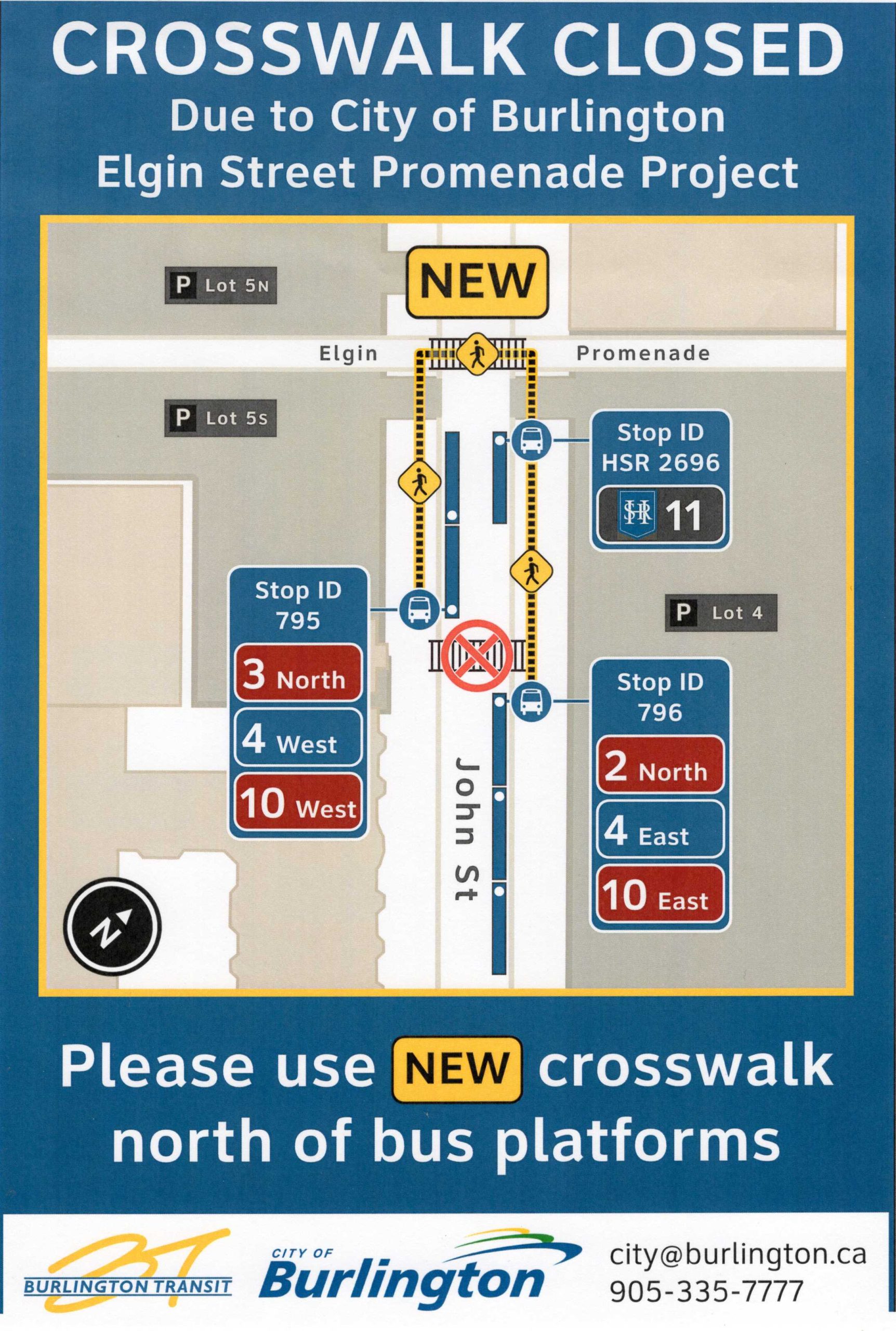
If they want to use a crosswalk, transit passengers will soon have to walk almost a block to make some connections at the transfer point where the former downtown terminal now sits empty. The existing crosswalk will close within the next month or so.
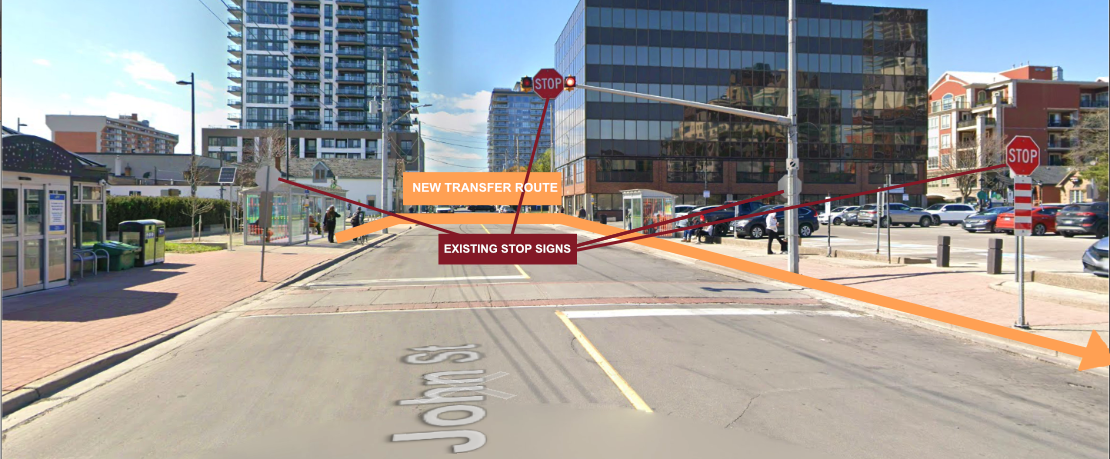
The change is being made at the direction of the city’s traffic department, which determined that only half of car drivers actually stopped at the stop signs that protect the existing crosswalk. There are three standard stop signs and a large overhead sign with flashing lights, plus a distinctive surface bordered by red brick at the current crosswalk. The stop signs will be removed.
Currently, an equal number of pedestrians use both crossings.
Now, pedestrians will be directed to the crossing point at the Elgin Promenade, a downtown walkway that runs just north of two existing parking lots.
Burlington Transit will be informing passengers of the change with in-bus posters, officials said.
BFAST spokespeople reacted negatively to the change, saying it will endanger pedestrians and encourage passengers to jaywalk to make bus connections.
Reversing the direction of traffic flow in downton parking lot 4, behind the bus shelters on the east side of John St., has already caused confusion, they said. Forcing pedestrians to cross beside the exit to the parking lot will be another distraction for drivers, who have not gotten used to the idea that the former entrance off John St. is now an exit.
“This is an example of the kind of anti-pedestrian bias that has guided Burlington’s traffic planning for too long,” said a spokesperson. “Instead of traffic enforcement to ensure drivers obey the stop signs, the city puts the onus completely on pedestrians to ensure their own safety.”
The change will make it more difficult for elderly and disabled passengers, they said.
Another spokesperson pointed out that it took almost 50 years to change the rules to give pedestrians, rather than cars, the right of way at the crossing at Brant and Elgin.